Become a PR Powerhouse
Précis Best Practices, Tips and Shortcuts
 Back to Catalogue
 Blog
Blog
Listen to this blog with one of our AI generated voices.
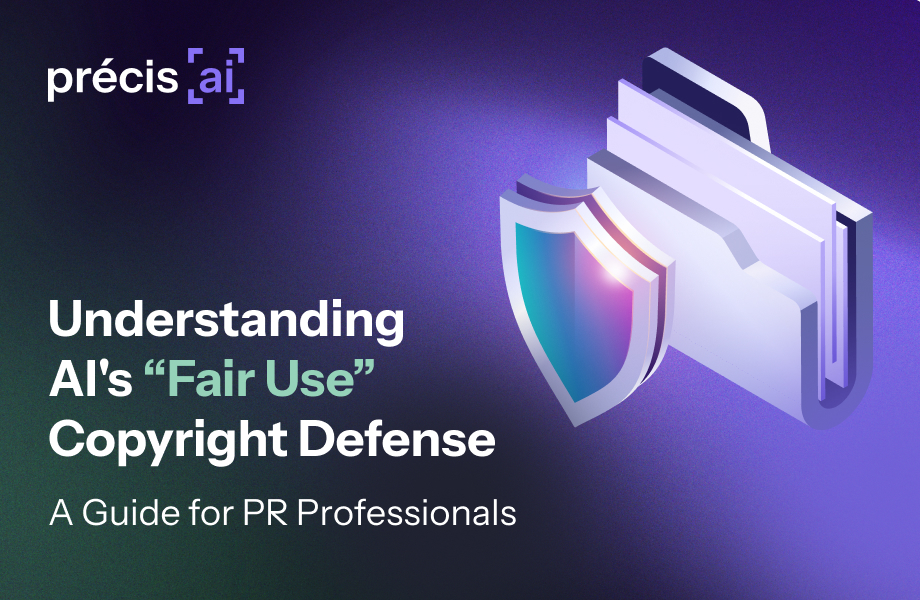
A federal judge recently ruled that Anthropic’s use of copyrighted books to train its Claude AI model qualifies as “fair use” under U.S. copyright law. This decision contributes to the ongoing debate about the legality of using copyrighted works in training large language models for generative AI services.
For context, the “fair use” doctrine supports the limited use of copyrighted material without requiring explicit permission, balancing the interests of copyright owners and the public. And in this case, Anthropic argued that their use of these books fostered human creativity and aligned with copyright law by promoting innovation.
Nevertheless, the judge also held Anthropic accountable for maintaining a digital library of pirated works. This split decision emphasizes that while AI companies may find new opportunities through legal clarity, they must also carefully navigate their ethical responsibilities.
By the same token, the ruling underscores the importance for PR and communications professionals to understand the legal nuances of AI-driven content creation.
From owned media and social platforms to podcasts and videos, the volume of content – and its duplication across channels – has surged. But with this growth comes complexity, especially around intellectual property. As more content is created, shared, and repurposed with AI, the risk of infringement has never been greater.
AI-generated content is not eligible for copyright protection unless the content has been drastically edited. As such, the US Copyright Office’s Copyright and Artificial Intelligence Report (Part 2) suggests creators might have stronger copyright claims if they use “expressive inputs,” like a copyrighted work, as prompts.
ArentFox Schiff’s Dan Jasnow explains the term like this: if a creator uploads an original image to an AI tool and instructs modifications, they have a better authorship claim. This is because the output is closely linked to the creator’s input, making copyright protection more likely. It’s worth noting that the Copyright Office views AI tools as those that “assist” in enhancing human creativity, meaning this kind of use does not change the copyright protection of the original work.
Documenting the sources and licenses of content is essential, especially as Part 2 of the report highlights that just using prompts in gen AI-produced content lacks the control needed for copyright protection.
Jasnow, the law firm’s AI Group Co-Leader, also claims that for legal clarity and protection, it is crucial to maintain detailed records of content origins and the extent of human input, particularly because the Office remains open to future changes if technological advances allow better human control over AI-generated content.
Therefore, PR teams should also keep records of where the AI model’s training data and AI-generated outputs originate and carefully consider which AI tools they use to ensure it is compliant with copyright law.
As copyright law continues to evolve, successful PR teams will need to stay informed about new rulings and adapt their strategies to minimize legal exposure and maximize compliance. BakerHostetler has an artificial intelligence, copyright, and class actions tracker that monitors key litigation related to the creation and use of generative AI.
Transparency and attribution are crucial when integrating AI into content creation. Clearly disclosing AI’s role not only informs audiences about the technology behind the content but also establishes trust and accountability. Whether for internal communications, client deliverables, or public distribution, maintaining transparency builds credibility and strengthens relationships with stakeholders. In addition, this openness is vital in mitigating potential reputational and legal risks by demonstrating a commitment to ethical practices in AI-driven content development.
The Anthropic ruling signals a new, more flexible era for AI in communications. By understanding and applying copyright principles, PR professionals can leverage AI’s potential with confidence and foresight, ensuring their brands remain both innovative and protected.
What are your thoughts on the balance between innovation and copyright protection in AI use? We’d love to hear your perspective in the comments below.
 Blogs
Blogs  Blogs
Blogs 
 Press Releases
Leave a Reply